Sustainability needs to enter the academic mainstream
Discussion details
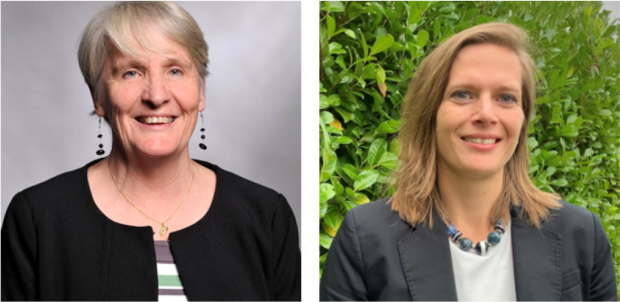
Just as science is fundamental to the work of the United Nations Environment Programme, sustainability should be fundamental to science and education in universities, say Dr Andrea Hinwood, UNEP’s Chief Scientist, and Veronika Hunt Šafránková, head of the UNEP Brussels Office. They were reflecting on the role of academic institutions in fostering resilient and sustainable societies, the theme of LERU’s recent 20th Anniversary Conference.
What is the role of science at UNEP?
Andrea Hinwood: Science is everything at UNEP. We have to have a strong evidence base for all of the environmental issues we deal with, so that we can advocate for sensible policy, legislation and programmes to solve what we call the triple planetary crises of climate change, pollution, and biodiversity loss. And my role as Chief Scientist is to work across the organisation, to put systems and processes in place to ensure that we’ve got high quality and robust science to inform decision-making.
Veronika Šafránková: Our work in Brussels is also based very much on science and data. We have a policy dialogue with our EU partners based on UNEP’s Medium-Term Strategy and programme of work, and strongly linked presently to the European Green Deal and European policies on the environment and climate. We also have a specific chapter on the science-policy interface, which looks across all thematic areas.
Does UNEP commission science itself?
Andrea Hinwood: Sometimes we commission science ourselves, depending on the topic. That can be a particular programme at the country level, or we might commission a piece of work at the global level. But more often than not we rely on research undertaken by academic and research organisations.
What kind of partnerships do you have with universities?
Andrea Hinwood: Whenever there are programmes in particular countries or in particular areas, these will be undertaken in partnership with academic institutions. We also have collaborating centres, which often involve a large contingent of universities.
Veronika Šafránková: It’s not just the scientific perspective. We also want to engage on the role of universities as a whole when it comes to building resilient and more sustainable societies. And there are many angles to this, including education and the sustainability of campuses.
Are universities receptive to making campuses more sustainable?
Veronika Šafránková: We’ve had a very positive response. We work with hundreds of universities on this globally, and we already have lots of good case studies. The Little Book of Green Nudges we’ve put together provides a range of solutions, because each campus is different, and some of the older universities are limited by what they can do in terms of building renovation. And this is also something that students want to see on campus, so it’s not just top-down.
What developments in education would you like to see from universities?
Andrea Hinwood: Even though we’ve had the environmental sciences as university disciplines from the late eighties or early nineties, we haven’t seen environmental sustainability come into courses such as law, engineering, or medicine. Some of the problems that we are facing require systemic changes to the way we produce energy and food, for example, so we have to mainstream that concept of environmental sustainability. Universities are a perfect place for that to happen.
Veronika Šafránková: And it would be really helpful if universities could equip students with the skills they need to become efficient policymakers, with an understanding of science. If you have to talk about capacity building when they are already policymakers, that is a bit late. So, we would like to cooperate and support universities in this role.
How does UNEP work with universities in the Global South?
Andrea Hinwood: Much of our historical engagement has been with universities in the north, and much of the literature we cite has also come from universities in the north, but this is changing and we need to do a lot more with universities in the Global South. For example, we would like to engage with junior scientists coming into the system from universities across the globe. If we could get a range of students from across north and south as a cohort, mentor them, and have them undertake some serious work within UNEP, I think there would be benefits for everyone in achieving different perspectives on environmental problems and their solutions.
Is Open Science important to UNEP?
Andrea Hinwood: A lot of the information that we require, particularly journal articles, is behind pay walls. And it is not just for us. We need to get this scientific information to the people making decisions, across the globe, and that is not necessarily happening. If we want countries to pick up sustainable solutions, they have to be able to find them and access them. There is also the issue of trust. There is a huge amount of disinformation across a range of different issues, and the only way to get over that is to make sure that science is open, accessible and transparent.
Veronika Šafránková: Citizen science is also very important for Open Science. We need to engage citizens so that they are more proactively involved in decision-making, and so they need to have access to the data. And the data needs to be easily digestible as well as accessible, not just for citizens but also for policymakers. Neither group has the tendency to read long reports!
This suggests there is a gap between scientific knowledge and policy uptake…
Andrea Hinwood: We do have a problem connecting science with policy in some key areas, including pollution and waste-related issues, where policies are not in place. But then there are issues like air quality. We have a global air quality problem and everyone says we need more policy, yet of the 193 member states that we are engaged with, 124 already have ambient air quality standards embedded within a legal instrument to manage air quality. So why is air quality not improving? Because in many locations the policies are not being implemented. So, we have to operate across all fronts, providing science to support good decision-making and good policy, but then we also have to look at implementation.
Veronika Šafránková: Looking back at my experience in government settings, scientists were sometimes invited to give feedback on policy, sometimes not. That is changing, but it should go further, so that they are an integral part of the decision-making process, across all sectors, including agriculture, environment, energy, and finance discussions, as key for sustainable development. Having scientists at the table really helps and should be the norm.
Has the role played by scientists in the COVID pandemic helped change perceptions?
Andrea Hinwood: I think it allowed politicians to see the benefit of science. They may not have followed the science every time, but they certainly had the scientists in the room, helping to make those decisions, on a regular basis. If we can continue that, that gives me great hope.
This interview is part of a special interview series on the occasion of LERU's 20th anniversary. The anniversary conference took place in Leiden on 19 en 20 May 2022.
©LERU: Text by Ian Mundell. Pictures by UNEP.
See the orignal interview below:
Sustainability needs to enter the academic mainstream | LERU
Log in with your EU Login account to post or comment on the platform.