Political Party Regulation and Inclusion in Malawi: Strengthening Institutional Frameworks
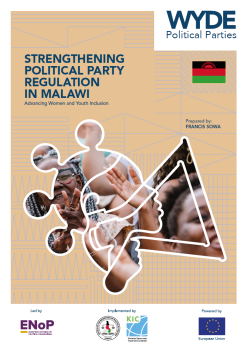
New report explores governance models, regulatory capacity and pathways to enhance participation
A new report under the WYDE Political Parties project examines the regulatory framework governing political parties in Malawi and its implications for inclusive political participation, with a particular focus on women and youth.
The report analyses the role of the Office of the Registrar of Political Parties in overseeing party registration and compliance, highlighting the importance of institutional coordination and regulatory clarity in shaping the functioning of political party systems.
In Malawi, efforts to strengthen political party regulation have been accompanied by ongoing challenges related to institutional capacity, enforcement mechanisms and resource constraints. The report underscores the need for continued investment in regulatory institutions to ensure that legal provisions are effectively implemented in practice.
At the same time, the analysis points to opportunities for strengthening governance models through improved coordination, clearer mandates and enhanced collaboration among institutions involved in political party oversight.
The report also highlights barriers to the participation of women and youth, including structural and socio-economic constraints, as well as limitations within party structures. Addressing these barriers requires not only legal reforms but also sustained institutional and political commitment.
By providing a detailed overview of the Malawian context, the report contributes valuable insights into how political party systems can be strengthened to promote greater inclusion, transparency and accountability.
This report is part of a regional comparative analysis covering Kenya, Malawi and Sierra Leone, offering a broader perspective on common challenges and pathways for reform across different contexts.

Log in with your EU Login account to post or comment on the platform.