Advancing substantive equality in the green transition: How Euroclima is closing gender gaps
News details
In observance of International Women's Day, the global development agenda faces a critical challenge: ensuring the transition to decarbonized economies is as socially just as it is technically sound. Within this framework, the Euroclima programme—part of the Global Gateway strategy—is establishing itself as a cornerstone for integrating gender perspectives into environmental public policies across Latin America.
Climate change does not affect all populations equally. Structural asymmetries—such as unequal access to resources, land ownership disparities, and the disproportionate burden of unpaid care—place women in a position of differentiated vulnerability. However, Euroclima and its implementing agencies are working to transform this reality by positioning women as strategic agents of change in climate action.
Women in climate action in Latin America ahead of the Year of Women Farmers
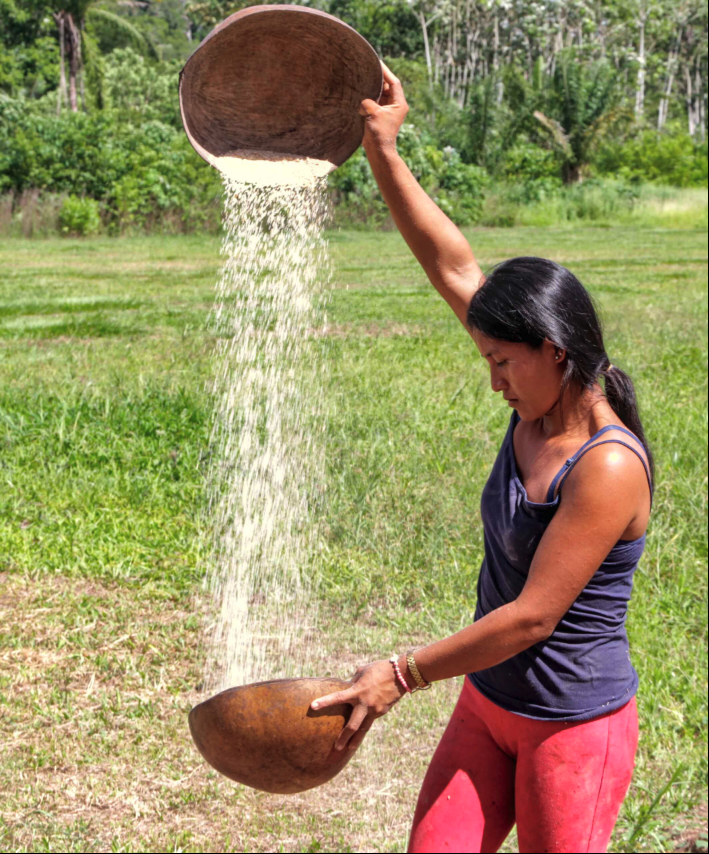
A primary example of this vision is the initiative led by the Deutsche Gesellschaft für Internationale Zusammenarbeit (GIZ) under Euroclima: "Women in climate and environmental action in Latin America ahead of the Year of Women Farmers." This project recognizes women not merely as a vulnerable group, but as essential architects of a sustainable bioeconomy.
GIZ’s work emphasizes that a fair bioeconomy requires equity mechanisms that empower women as key stakeholders. This is achieved by:
- Integrating women into the planning of nature-based solutions.
- Formally recognizing traditional knowledge.
- Creating dedicated spaces for participation at both community and institutional levels.
By ensuring rural women producers have equal access to resources and representation, public policies for territorial conservation become more effective and resilient. For ministries of agriculture and the environment, this approach proves that female leadership is a primary success factor in the sustainability of agri-food systems.
Explore more: Learn about good practices and challenges in gender-inclusive bioeconomy initiatives in Ecuador, Brazil, Peru, Colombia, and Costa Rica at this link.
Inclusion in the green hydrogen industry
The transition to clean energy also offers a unique opportunity to correct historical biases in traditionally male-dominated sectors. In Chile, the Spanish Agency for International Development Cooperation (AECID), in collaboration with the Ministry of Energy and the European Union, developed the "Study on the inclusion and opportunities for women in the green hydrogen industry."

As part of the 2023–2030 Green Hydrogen Action Plan, this study identifies that gender gaps in this emerging industry are primarily driven by educational segregation in STEM fields and a lack of shared domestic care responsibilities. To reach full potential, the study suggests:
- Implementing local hiring quotas with gender clauses.
- Developing mentorship programmes for women.
- Establishing policies that improve work-life balance.
This document serves as a roadmap for lawmakers and cooperation organizations, providing the incentives and regulatory frameworks needed to ensure the new energy economy does not replicate the exclusions of the past.
Watch the webinar on perspectives from Mexico, Costa Rica, Colombia, Brazil, Peru, Chile, Argentina, and Uruguay.
Socio-productive inclusion in the Amazon
Reinforcing these efforts, Euroclima is promoting the "Strengthening the Bioeconomy of the Amazon" project in Brazil. Implemented by Expertise France in collaboration with EMBRAPA, this initiative operates in the states of Roraima, Pará, and Amapá, focusing on the inclusion of women in strategic value chains such as pracaxi oil, andiroba, and cupuaçu cultivation. What distinguishes this initiative is its intersectional approach. It goes beyond technical infrastructure by applying a GESI (Gender, Equality, and Social Inclusion) analysis to ensure genuine opportunity for vulnerable sectors. Key measures include:
- Co-responsibility measures: Adapting schedules and providing childcare to facilitate effective participation.
- Safety protocols: Integrating gender-based violence prevention policies, recognizing that security and human rights are indispensable for any sustainable venture.
Towards substantive equality in the green transition: technical cooperation with a gender focus
Integrating a gender perspective into climate action is a strategic tool for closing inequality gaps in access to resources, representation and the exercise of rights. By ensuring the participation of women and men in all phases of projects, it is possible to capitalise on their traditional knowledge, strengthen community resilience and ensure an equitable distribution of benefits, preventing these from being monopolised by traditionally male-dominated groups.
By focusing efforts on strategic sectors such as the bioeconomy and green hydrogen, Euroclima ensures that investment in sustainable infrastructure under the Global Gateway has a sustainable social impact. This means that technical interventions use equity as the necessary tool to ensure that women not only have the right to participate in the energy and climate transition, but also the real and effective conditions to do so.
It is essential to understand that reducing gender gaps is an indicator of climate efficiency for the success of Low Carbon and Climate Resilience Development Strategies (LTS) and Nationally Determined Contributions (NDCs). It also represents a firm commitment to social justice within the United Nations Framework Convention on Climate Change (UNFCCC), aligning with the Lima Work Programme on Gender and its Belem Gender Action Plan. These frameworks are two fundamental milestones for climate action with strong recognition of the work and relevance of gender equality in the region.
The integration of gender KPIs and the promotion of care policies are important equity actions to ensure that Global Gateway investment is truly transformative. However, a transition towards resilience requires going beyond traditional economic indicators to address the social and psychological determinants that condition women's empowerment. These intersections reveal invisible barriers with a tangible impact on physical and mental well-being, factors that must be considered as a priority to ensure comprehensive development.
This 8 March, we celebrate that, through Euroclima, Latin America is demonstrating that the path to Net Zero 2050 is built on equality. Consolidating this progress invites us to strengthen collaboration between institutions and decision-makers, ensuring that the promotion of equity policies continues to be the engine that transforms social structures and guarantees real climate sustainability.
The examples cited from GIZ, AECID and Expertise France are just a sample of how Euroclima facilitates policy dialogue between both regions. The real driving force behind the programme is the coordinated work of its eight implementing agencies, which are joining forces to strengthen climate governance: from FIIAPP's experience in public systems to the technical expertise of AECID, the AFD/Expertise France Group, ECLAC, GIZ, UNEP and UNDP. Together, these organisations ensure robust and synergistic implementation in each of their initiatives. Find out more about the extensive work of these agencies at: www.capacity4dev.europa.eu/projects/euroclima_en
The Euroclima programme is co-financed by the European Union and the German Federal Government through the Federal Ministry for Economic Cooperation and Development (BMZ) and Spanish Cooperation, and is implemented in the spirit of Team Europe through the synergistic work of eight organisations: the Spanish Agency for International Development Cooperation (AECID), the French Development Agency Group (AFD/Expertise France), the Economic Commission for Latin America and the Caribbean (ECLAC), the Spanish Cooperation Foundation specialising in the improvement of public systems (FIAP), the Deutsche Gesellschaft für Internationale Zusammenarbeit (GIZ) GmbH, the United Nations Environment Programme (UNEP) and the United Nations Development Programme (UNDP).
Log in with your EU Login account to post or comment on the platform.