News details
What happens when Global Citizenship Education stops being a concept – and starts reshaping everyday classroom life?
Across eight European countries, the GET project is helping bring GCE into national curricula by supporting primary and secondary teachers to experiment with new, free educational resources and approaches.
In six Bulgarian schools, working with pupils from 4th to 7th grade, teachers decided to rethink how climate change is taught. Instead of lessons driven by fear or overwhelm, they introduced creative, student-centred activities using GET’s Teaching and Learning Units (TLUs). Climate change was no longer presented as a distant catastrophe, but as a shared challenge that students could explore, question and respond to.
“The GET materials are a breath of fresh air. The children started asking questions they had never asked before,” said Irena Balahurova, biology teacher at ‘Hristo Botev’ Primary School in Bata village.
Something shifted. Students who had once listened passively began offering ideas, debating solutions and connecting environmental challenges to their own lives. GCE didn’t stay in the textbook – it came alive in the room.
Read the full Bulgarian story and testimonies here.

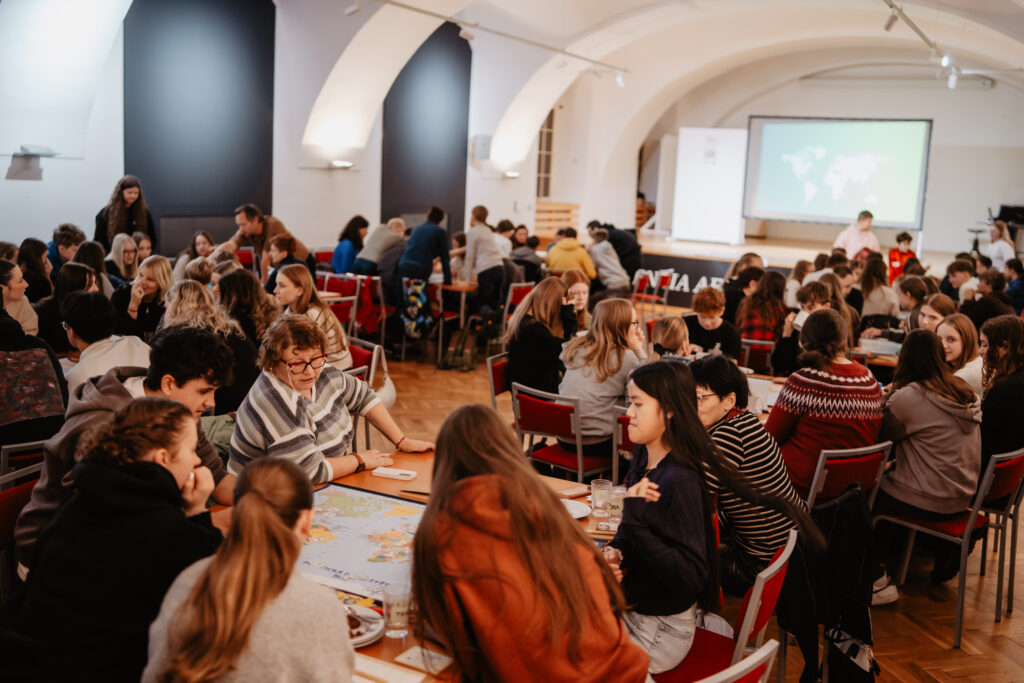
A similar transformation unfolded at Gymnázium Moravské Budějovice in the Czech Republic. There, teachers used the TLUs to tackle global inequalities through simulation games and experiential learning. Instead of traditional lectures that risk leaving students feeling powerless, the class stepped into real-world scenarios, grappling with fairness, privilege and decision-making firsthand.
“I had no concerns. The material was very well explained and built upon my previous experience, so I was actually looking forward to teaching it,” said Alena Janáčková, History and German teacher.
The outcome went beyond engagement. Students developed sharper critical thinking skills, stronger confidence and a deeper understanding of complex global issues – showing how participatory, game-based methods can fundamentally reshape both learning and the learner’s role.
The GET journey continues. Follow the project on Instagram, Facebook, and YouTube to discover more stories of change from classrooms across Europe.
Log in with your EU Login account to post or comment on the platform.