Democracy Needs Partnerships. Interview with GIZ Managing Director Ingrid-Gabriela Hoven
News details
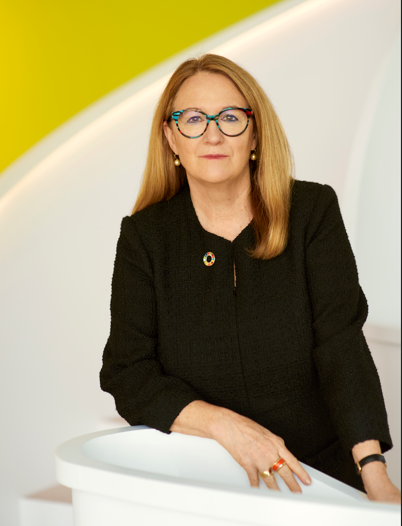
At a time when democratic norms are under unprecedented pressure, the International Day of Democracy reminds us of their irreplaceable value. To explore how these values can be defended and promoted, we spoke with Ingrid-Gabriela Hoven, Managing Director of the Deutsche Gesellschaft für Internationale Zusammenarbeit (GIZ), about the role of Team Europe Democracy in strengthening democratic resilience worldwide.
We are currently experiencing a global backlash against democracy. Why are democratic values still crucial for international development cooperation, especially in countries with weaker democratic structures?
Democracy is not just a moral ideal that guarantees people’s rights and a responsive government. It is a practical concept. Rule of law and transparency, for example, create the stability businesses need to invest, and this lays the ground for sustainable development. An MIT study that used evidence from 1960 to 2010 estimated that a country that switched to democracy had a 20% higher GDP per capita in roughly 30 years compared to autocratic countries. This contradicts myths about democracies being too slow or inefficient. On the flip side, research has also shown that democracies are economically more resilient in crises, while also providing for more equitable growth that reduces poverty and empowers marginalised groups.
If we take it to countries with weaker governance structures, we must think of the many connected issues that interact with and amplify negative effects and further weaken democratic processes. To counteract this, complex, holistic and long-term measures are needed. For example, in Guatemala, Team Europe Democracy, a global initiative funded by the German government and the European Commission involving 17 Member States, has provided advice on how international donors can work together to strengthen the electoral process while also enhancing good governance with targeted support to judicial and transparency reforms. By strengthening electoral integrity and supporting civil society engagement, actions we take as GIZ and more broadly as Team Europe with other European Member States have not only aimed to improve democratic processes but also to address systemic issues such as corruption and access to justice.
How do you see the role of networks such as Team Europe Democracy in the current global landscape of democracy and development cooperation, and what opportunities does it offer GIZ and Enabel to promote sustainable change in partner countries?
Globally, we do see that the structures have dramatically changed. It used to be that democracy-supportive countries had strong networks, resources and outreach globally – now we see the same but for authoritarian-leaning networks. So, in this context, each and every network that stands for democracy is vital, as only a collective response can parry these anti-democratic movements. No single agency, Member State or development agency can address these challenges alone, and if Europe wants to remain relevant in an increasingly fragmented world, it needs to speak with one voice. This is why TED represents such a promising and needed Team Europe initiative: a platform linking knowledge exchange, national and European strategies and action.
One example is activities in Kyrgyzstan, where TED has played a key role in the shaping of the “Justice Sector Reform and Digitalisation” initiative and more broadly promoted evidence-based policymaking in the justice sector to improve transparency, institutional performance, and public trust. TED’s support helped to more deeply embed a people-centred justice approach in this project, an essential step towards improving access to legal services for marginalised groups. This approach relied on the use of comprehensive, reliable, and user-informed data on the functioning of the justice system. In doing so, TED has allowed for the sharing of best practices and expertise, ultimately enabling an increase in access to legal services for vulnerable populations. This coordinated approach not only supports democratic governance in Kyrgyzstan but also in other partner countries.
How can we prevent democratic support from being perceived as foreign interference? How can we design our approaches to be seen as partnership-based and respectful, particularly in countries with limited political space?
Development policy in general aims for partnership at eye-level. We do see a more diverse field of actors internationally and also more self-reliance in our partner countries. We have to show the advantages of democratic principles and processes without falling into the trap of arrogance. At the same time, there is a shift towards authoritarianism that we must respond to. Often, it is important to stay engaged even in the context of more restrictive or repressive spaces. We always emphasise local ownership and collaborative engagement and advocate for the benefits of democratic governance or rule of law. In Malawi, our approach to designing a social accountability framework for Global Gateway investments involved extensive consultations with local stakeholders, including actors at the national and subnational levels. This is made possible by GIZ’s extensive presence on the ground, which allows us to work in a way that reflects the complexities of the local context. This has resulted in a more inclusive process that respects local contexts and priorities, ultimately enhancing the effectiveness of our initiatives and fostering a sense of shared ownership among the community.
In an era marked by disinformation and polarisation, how can we ensure that democracy is further recognised as an essential value – especially among younger generations?
We do see that young people might be dissatisfied with some outcomes of the political systems, but in general they want to be able to participate and have opportunities and rights. Last year, we saw a big wave of protests under the label of Generation Z and they were not tied to a single region. We saw it in Madagascar, Serbia, Nepal, Kenya, Indonesia, Peru, among others. The circumstances have been different in each country, yet we could see recurring topics: government accountability, fighting corruption, better living quality for citizens. When we talk about disinformation, this is also a problem we face in our countries in Europe. So research findings of TED have great value for us here as well. TED has engaged in a pilot research project to identify effective responses against disinformation in the Philippines and Mongolia with two local partners, IRIM and INCITE. These organisations are well suited to understanding the local context as polarisation can play out quite differently. In Mongolia, the research findings highlight that youth vulnerability to disinformation was not just about age or education but rather about how youth process information emotionally or how it matched existing beliefs. In the Philippines, trust in government seemed to align with perceptions of fairness and transparency, not just factual accuracy. This shows that one-size-fits-all programmes may not work. You must tailor interventions to the specific concerns, values, and communication habits of each community.
How can this be done?
We must actively engage youth as citizens, and not only perceive them as passive. In this TED pilot in Mongolia, young people were trained as peer educators, while in the Philippines TED’s partners created a local platform where youth could produce their own content, tied to the concerns of their community. This led to messages that resonated with their peers. Another research finding is that polarisation can be countered more effectively by focusing on shared values rather than merely mentioning facts.
Democracy cannot be defended without alliances. Where has coordination between the EU, its Member States, and civil society organisations been particularly successful? Where do you see weaknesses?
The challenge for European coordination lies in the need for more structured collaboration. To act more decisively, joint planning and aligned priorities are essential, ensuring that projects on the ground complement one another rather than overlap or compete. Coordination between the EU, its Member States, and civil society has shown particular success in initiatives like the TED, where collective action and shared resources have strengthened democracy support. TED hosts thematic working groups that bring together EU representatives from different departments, members and civil society for dialogue on best practices to ensure alignment and coherence in democracy support globally. An example here can be the working group on information integrity, where EU Member States and civil society identified the need for a coherent approach and practical guidelines for support to information integrity. For this, a practical toolkit on strengthening support to independent media and information integrity was developed through a series of consultative interviews with stakeholders around the globe. Such a toolkit helps translate EU principles into practice at country level.
Log in with your EU Login account to post or comment on the platform.