Évora’s SDG Route: Youth Rediscover their City through Global Citizenship
News details
What can a city street tell us about poverty, peace, climate justice or inequality?
In Évora, Portugal, a new Sustainable Development Goals Route is inviting residents and visitors to look at the city through a different lens. Created by young people, the route connects 17 locations in Évora’s historic centre with the SDGs and wider questions of social justice, sustainability and Global Citizenship.
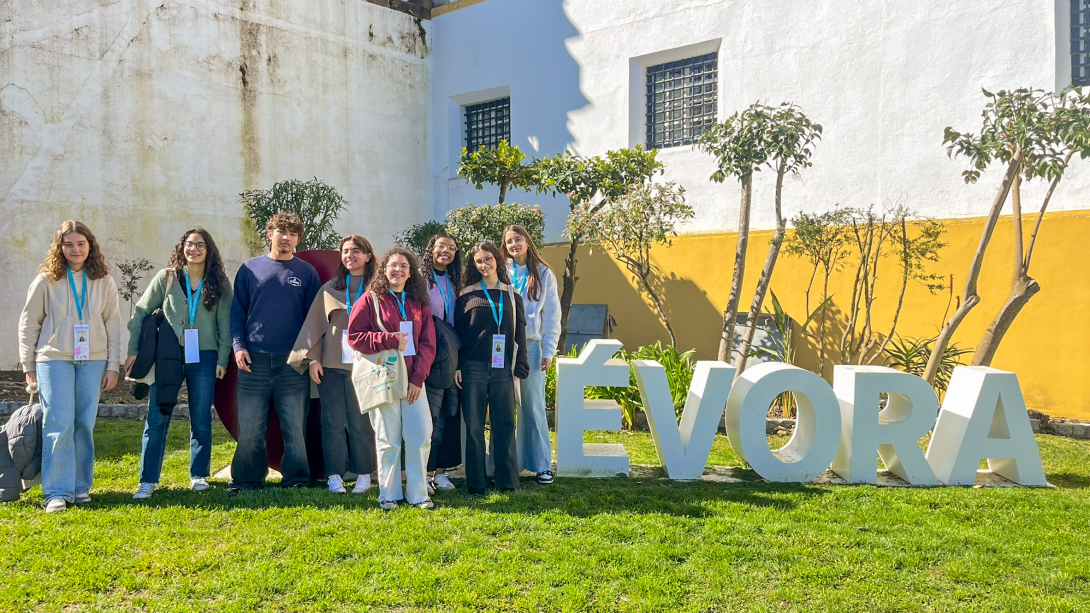
The route was developed by 15 second-year Psychosocial Support students from Severim de Faria Secondary School, with support from the Centre for Social Innovation of the Eugénio de Almeida Foundation.
Rather than focusing only on Évora’s best-known monuments, the students looked for less visible stories and unexpected connections.
“We wanted to go beyond the obvious story of the buildings, choosing less famous places and sharing a different perspective of the city,” says student Lara Alegria.
The students researched local places and stories, linking them with issues including poverty, food, sustainability and the rehabilitation of infrastructure. One stop features an “Olive Tree for Peace”, planted during wartime and connected by the group to SDG 16 on peace, justice and strong institutions.
The students also led the route’s inauguration themselves, presenting the stops and explaining the thinking behind them.
For Lara, the process showed the value of giving young people genuine opportunities to participate.
“We noticed that our voice, as young people, is quite significant, and that great changes start like this.”
The initiative was developed through Rural Voices 2030, an EU DEAR project implemented in Portugal by IMVF, which works to equip young people, particularly in lower-density territories, with the knowledge and tools to act as agents of change.
With Évora preparing to become a European Capital of Culture in 2027, the route also offers a way of seeing heritage not simply as something from the past, but as a starting point for thinking about the kind of city and society people want to build.
The 17-stop route will remain available through an online map in Portuguese and Spanish, with further languages expected in 2027.
This is much more Cap4Dev-news-ish: around half the length, more readable, and still preserves the actual substance.
Log in with your EU Login account to post or comment on the platform.