Moving Forward on Rule of Law and Accountability
News details
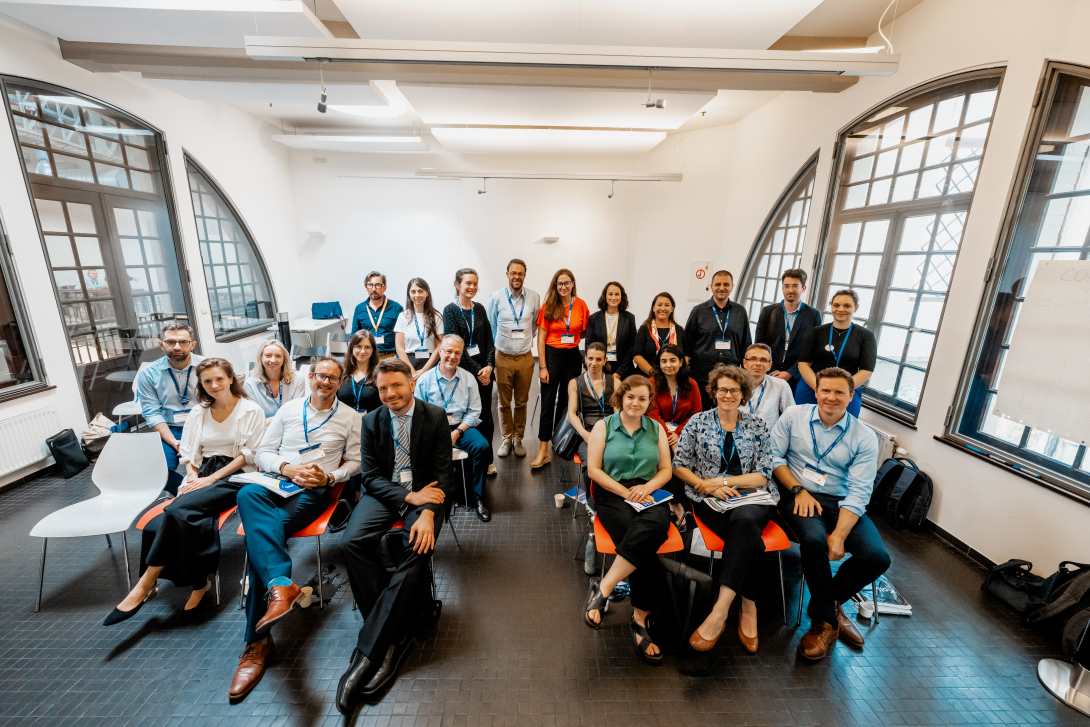
During the Team Europe Democracy (TED) Annual Meeting in Brussels in June 2026, Working Group 1 (WG1) convened to define its strategic trajectory for the 2026–2027 cycle. Bringing together practitioners from European Union institutions, EU Member States, and partner civil society organisations, the session marked a deliberate pivot from broad conceptual exchanges toward an operational, applicative network. As global pressures on democratic governance persist, the discussions reaffirmed that the rule of law, anti-corruption, and accountability are not abstract ideals but foundational prerequisites for sustainable development cooperation, social cohesion, and democratic resilience.
To translate this ambition into practice, the group is anchoring its future efforts in two fundamental shifts. First, the working group will transition from purely sharing knowledge toward delivering action-oriented support that will aim to yield concrete results and follow-up actions across partner countries. Second, the group will focus on embedding democratic governance directly into European development frameworks by contributing to the process of connecting Global Gateway investments to specific country-level reforms. Sustainable infrastructure and economic investments require predictable, transparent, and enabling environments to thrive. By integrating people-centred justice, judicial independence, robust anti-corruption mechanisms, and commercial justice solutions tailored to small and medium-sized enterprises (SMEs), Team Europe can ensure that economic development reinforces systemic accountability rather than bypassing it.
Realising this systemic impact relies on maximising TED’s unique comparative advantage as a trusted convener. The workstream will actively leverage this convening role to bridge dialogue and action among EU Delegations, Member State development agencies, local civil society, and international implementing partners around co-created, country-level reform priorities. By drawing on participatory frameworks – such as national Open Government Partnership action plans – TED can help align external assistance with domestic reform momentum. In parallel, the group will invest energy and resources to continue strengthening operational links with other TED Working Groups on shared, cross-cutting challenges. Deepening collaboration around the intersection of information integrity, public accountability, and civic participation ensures that institutional integrity is complemented by informed citizen oversight and resilient public debate.
As WG1 embarks on this next phase, its capacities are further strengthened by new organisational appointments. The World Justice Project (WJP) has officially stepped into the role of Thematic Lead for WG1, following a longstanding track record of insightful contributions to TED and its rule-of-law workstreams. As an independent, multidisciplinary organisation renowned worldwide for generating empirical legal data, research, and diagnostic tools like the Rule of Law Index, WJP brings invaluable analytical depth and practical methodology to the group’s work.
WG1 is also delighted to welcome UpRights, an international legal non-governmental organisation based in The Hague, as a new member to support our collective work on international justice and accountability mechanisms. UpRights is dedicated to advancing justice and accountability for human rights violations and international crimes, while supporting evidence-based approaches to the protection of human rights and the rule of law. Founded in 2020, the organisation combines research and technical training for legal practitioners with efforts to make complex legal and human rights issues accessible to wider audiences, as illustrated by this short video explaining the concept of transitional justice.
Looking ahead, the actionable commitments and thematic inputs gathered during the June session are currently being consolidated into the comprehensive 2026–2027 TED Workplan. This roadmap will detail concrete joint missions, analytical tools, technical assistance facilities, and inter-working-group initiatives designed to maximise impact across partner countries. The full workplan for the entire TED network is expected to be officially presented to the membership in October 2026, setting the operational baseline for our joint European efforts to advance democracy, integrity, and the rule of law worldwide.
Log in with your EU Login account to post or comment on the platform.