Senegal charts its energy efficiency course to 2050 with EU support

News details
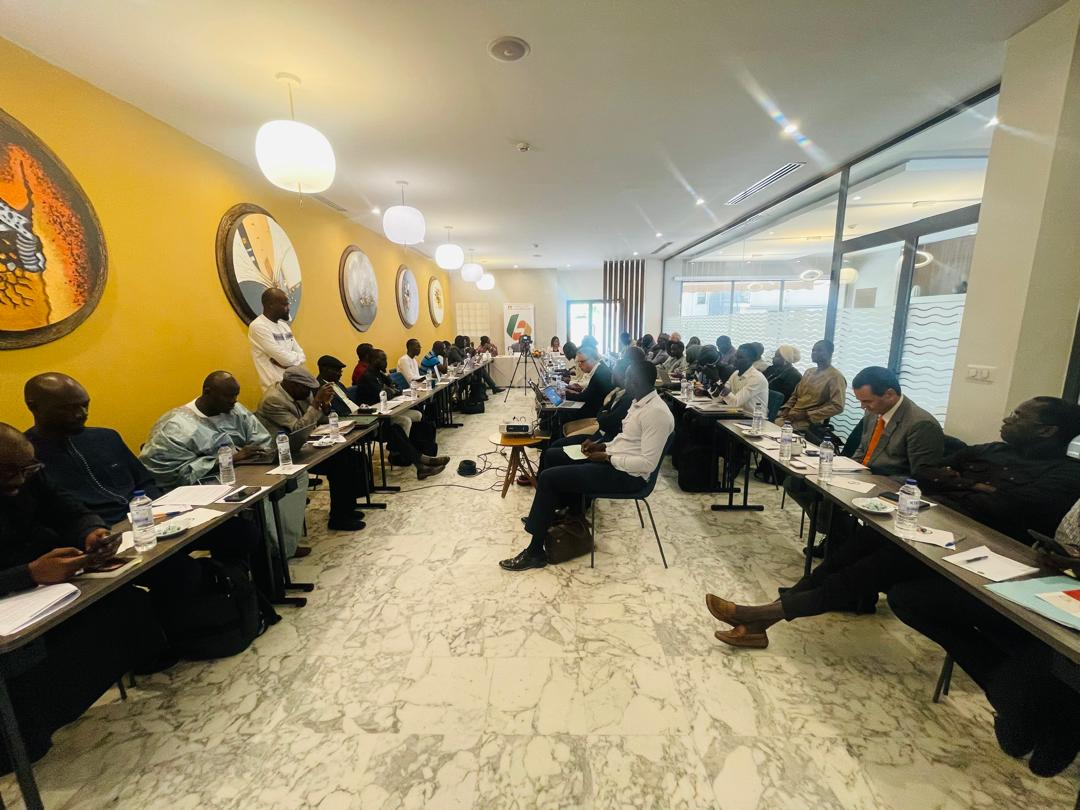
Senegal has taken a significant step towards turning Africa's continental energy efficiency ambitions into national action. On 10 September 2026, the Agency for the Economy and Management of Energy (AEME), under the Ministry of Energy and Petroleum, brought together around 60 energy efficiency stakeholders in Dakar to review the results of several months of modelling and strategy work.
The workshop formed part of the African Energy Commission's (AFREC) support to Senegal, with technical assistance provided through the Continental Energy Programme in Africa (CEPA), funded by the European Union.
Three documents, one direction
Participants examined three complementary documents. The draft National Energy Efficiency Strategy and Action Plan (NEESAP) updates the National Energy Management Strategy 2015–2030 and extends Senegal's vision to 2050. It is accompanied by Energy Performance of Buildings (EPB) guidelines and by Minimum Energy Performance Requirements (MEPR) for new buildings.
The draft NEESAP covers every end-use sector: industry, services and trade, appliances and clean cooking, buildings, transport and electricity supply. Its measures were ranked using a method that compares the energy savings each one delivers with its implementation cost, so that the action plan points investment towards the measures that deliver the most for the money.
Shaped by national stakeholders
Discussions confirmed that the strategy and action plan match national expectations for 2035 and 2063. Participants also used the session to strengthen the draft, proposing ways to speed up implementation and make it more effective. Their contributions will be incorporated into the final documents.
"We are not developing strategies for countries; we are developing them with countries, under their leadership and according to their priorities," said Mehdi Khouili, Principal Capacity Building, Partnerships and Countries' Support Officer at AFREC. "Senegal is showing how Africa's continental energy efficiency ambitions can be translated into concrete national action. Our next challenge is to move together from strategy to implementation, and from implementation to measurable results."
From continental commitment to national framework
The NEESAP responds to the African Energy Efficiency Strategy (AfEES), approved by African Union Heads of State in February 2025, which commits the continent to increasing its energy productivity by 50% by 2050 and by 70% by 2063. Senegal is one of the pilot countries receiving support to prepare its NEESAP and EPB guidelines.
Once adopted, the NEESAP will give Senegal a single reference framework for energy efficiency, setting out prioritised measures, the institutions responsible and the investment required. It is designed to guide ministries, energy agencies and utilities, the regulator and financial institutions, while offering the private sector, professional bodies, academia and civil society a shared basis for planning. It will also serve as a reference for technical and financial partners supporting Senegal's energy transition, including the European Union.
Next steps
In the coming months, the Ministry of Energy and Petroleum and AEME will convene a high-level meeting to adopt the strategy. Development finance institutions and cooperation partners will be invited, with the aim of mobilising investment for the action plan's priority measures

Write a message…
Log in with your EU Login account to post or comment on the platform.