In the Words of Aliimalemanu Alofa Tu‘uau: When quota laws allow women’s voices to be heard
News details
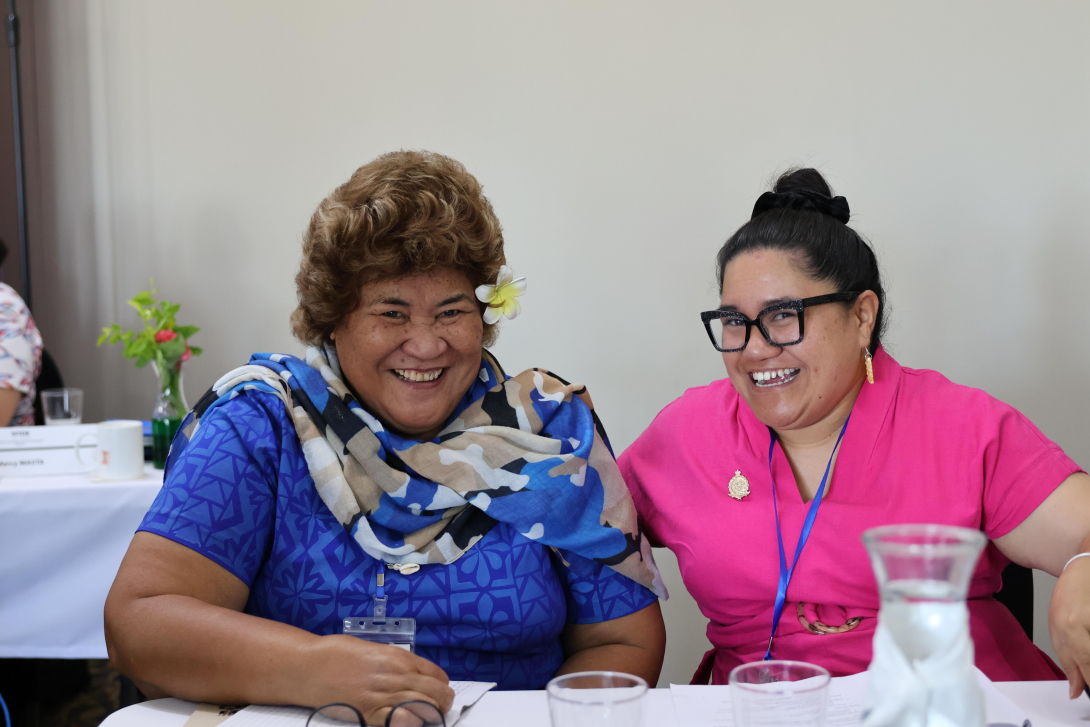
Aliimalemanu Moti Momoemausu Alofa Tu’uau is an accountant by profession and former Member of Parliament for Alataua i Sisifo in Samoa, since 2016. She joined the two-day intergenerational dialogue “Waves of Change: Pacific Women Lead Across Generations in Fiji” aimed at advancing women’s participation in leadership and decision-making and transforming gender norms which took place on 30 September and 1 October 2025 in Nadi, Fiji.
“I first entered Parliament in 2016 through the general election, and I chaired the Public Finance & Expenditure Committee, an area close to my professional expertise. The work was rewarding and I saw firsthand how women’s perspectives brought balance to decision-making in Finance. Our contributions make policies more holistic and more human.
In the 2021 general election, I lost my seat, but I later returned through Samoa’s 10 per cent quota for women in Parliament, as the sixth woman with the highest vote percentage. The environment was different this time and it was not an easy road. There was resistance and debates over whether the quota should exist at all. I had to advocate tirelessly, not only inside Parliament but across communities, to explain why women representation matters. This seat was not easy to get; it was an acknowledgment of the barriers women face in entering politics. I remember going from member to member, lobbying for support. I was surprised and heartened to find that many male MPs eventually stood beside us. They realized that having women in Parliament benefits everyone. The moment when the motion to abolish the quota was defeated remains one of the proudest achievements of my career. It took almost 16 months of in and out of court before I was finally sworn in. That period taught me patience. There were moments when I questioned if it was worth continuing, but I knew this fight wasn’t just for me, it was also for the young women who would come after, for the next generation to see that women’s voices matter in Parliament. The women’s quota in Samoa was not easy to achieve. It took years of advocacy and debate. And even now, we must defend it constantly, not for myself, but for the girls and women who deserve to be leaders, making laws that affect their lives.
The road for women in politics in Samoa is never easy. Financial constraints, cultural expectations, and persistent stereotypes all make it harder for women to contest. I’ve seen women who are capable and are passionate but hesitate to run because they lack resources or community backing. Some still believe a woman’s place is in the home. I’ve tried to challenge that by leading through example, speaking up in the House of Chiefs, contributing in village meetings, and showing that women can lead while still honoring cultural values.
Role-models and mentoring are also essential: when I decided to enter politics, I first sought advice from Fiame Naomi Mata‘afa, who was then a senior Member of Parliament and later became the first woman Prime Minister. Her encouragement gave me courage. But before I could take that step publicly, I had to win the support of my family and village. That’s how it works in Samoa, your leadership begins at home, then in your community, and only then on the national stage. I also learned from other women MPs. They shared their experiences, their mistakes, and their lessons. That guidance helped me navigate the political space, and now, I do the same for younger women. I’ve mentored several who have since contested elections.
To the young women who dream of leadership, I say this: start where you are. Begin in your family, your village, your church. Volunteer, speak up and take responsibility. Leadership doesn’t start in Parliament; it starts in your community. Confidence is key. I used to be shy and afraid to speak in public. But when I finally stepped into Parliament, I realized I can do this. We all bring something, whether it’s our profession, our motherhood, our lived experience. Use that strength. Believe in yourself and let that belief grow stronger each time you speak.”
The Convening took place under the WYDE | Women’s Leadership initiative, funded by the European Union, which is a collaborative global effort aimed at advancing women’s full and effective political participation and decision-making at all levels, especially those most often left furthest behind.
Note: These publications aim to stimulate a constructive debate on key issues of interest for advancing gender equality and women’s empowerment. The views expressed by the individuals interviewed for the production of our editorial content do not necessarily reflect the official position of UN Women, the United Nations system agencies or the European Union.
Log in with your EU Login account to post or comment on the platform.