Mau Forest: establishing a joint surveillance unit for Kenya's vital water tower ecosystem

Discussion details
The Mau Forest ecosystem plays a crucial ecological and economic role as Kenya’s largest water tower, supporting the Mara River and downstream ecosystems, including the Maasai Mara and Serengeti biodiversity. It covers about 4,000km2 and provides water to some 6 million Kenyans, as well as other services estimated to be worth USD 1.84 bn per year.
Pressures on the forest and on local people
However, the ecosystem faces increasing pressures from deforestation, agricultural expansion, weak institutional coordination, and limited access to productive resources. Meanwhile, communities in the area rely on smallholder farming and forest resources for survival, yet often lack access to sustainable production practices, markets, and enterprise support.
In a bid to address the pressures on the forest and support and engage local communities, the project organised the recruitment of a Joint Surveillance Unit (JSU) across 5 forest stations in the Mau Forest Ecosystem. The unit was recruited in an inclusive and participatory process involving community representatives, local administration, the Kenya Forest Service, and Rhino Ark. Six community scouts (4 men and 2 women) and a supervisor were selected.
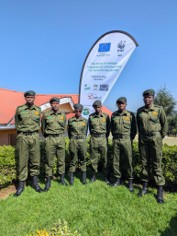
The scouts then undertook a 3-month basic ranger training course at the Kenya Wildlife Service Law Enforcement Academy in Manyani. The team successfully completed the training, winning 2 of the 3 awards presented during the pass-out parade. The 2 female scouts received special recognition for their commitment and discipline.
“The recruitment and engagement of the community scouts have created a renewed interest in the community towards conservation and the role of the community in the same. A sense of ownership is key in enhancing sustainable management of the forest resources. I am proud of the progress made by the team, and I can truly say we chose right,” said Rhino Ark Programme Manager.
"The first week was so difficult"
See below an interview with Damaris Meleto, whose recruitment to the Mau Joint Surveillance Unit took her to the Kenya Wildlife Service's Law Enforcement Academy, where she successfully completed the intensive Community Scouts Basic Course..
A boost for community ownership of conservation
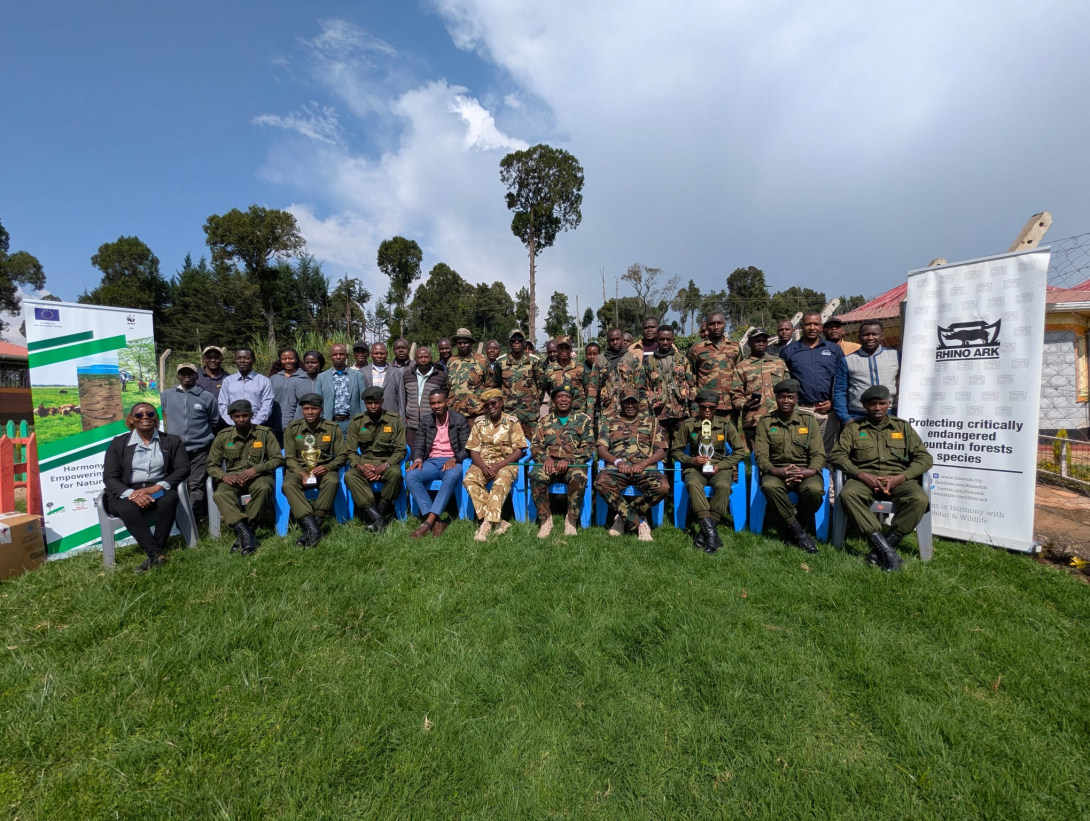
Establishing the JSU has strengthened collaboration between communities and government agencies, increased community ownership of conservation, and improved the capacity for sustainable forest management. This initiative demonstrates how Global Gateway investments can deliver tangible benefits for local communities while advancing long-term conservation and climate goals. The project has also revived hope in community forest associations as demonstrated by the increased number of new members who have joined since the project began. There is increased interest in conservation and nature-based enterprises.
Potential for nature-based enterprises
Indeed, ecotourism in the Mau Forest presents a high-potential opportunity to catalyse partnerships, attract green investment, strengthen nature-based value chains, and create community-led enterprises. By linking forest restoration with tourism, conservation and local economic development can become mutually reinforcing, generating sustainable livelihoods while safeguarding the important water tower.
The Mau Forest is located in the EU-identified key landscape for conservation and development of Southern Kenya-Northern Tanzania (SOKNOT). As such, it is supported by through the EU's NaturAfrica initiative by the Harmony in Habitat project, led by WWF-Kenya and implemented by Rhino Ark Charitable Trust and other partners including 5 Community Forest Associations, Kenya Forest Service, Kenya Wildlife Service and National Government Administration Officer (NGAO).
Log in with your EU Login account to post or comment on the platform.