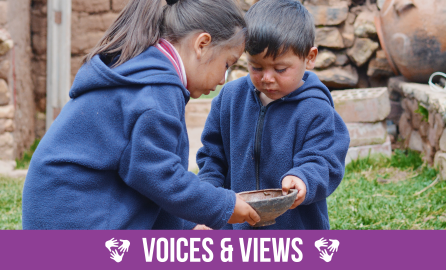
Download the article here!
In 2021, the European Commission launched a new European strategy with the clear objective of boosting smart, clean, and secure links in the digital, energy, and transport sectors, while strengthening health, education, and research systems worldwide. Between 2021 and 2027, under the Global Gateway, up to EUR 300 billion will be invested in sustainable, high-quality projects that address the needs of partner countries, delivering lasting benefits for local communities.
In 2023, eight years since their last gathering, EU leaders and leaders from the Community of Latin American and Caribbean States (CELAC) met in Brussels to renew “their long-standing partnership, […] founded on shared values and interests, and strong economic, social and cultural ties.”
Leaders pledged to reinforce key areas of partnership and committed to address gaps in investment via the Global Gateway Investment Agenda. This is a unique tool that includes “an initial selection of more than 130 potential public-private investment projects across strategic sectors of common interests. The investment agenda is backed by the EU, Member States, international financial institutions, and the private sector.” The objective is to close the gap in funding by mobilising private and public capital towards sustainable development projects in the following sectors: digital transformation, education, health infrastructure, energy production, the environment, raw materials, and local value chains. Team Europe will provide over EUR 45 billion to Latin America and Caribbean countries (LAC), under different modalities.

In Ecuador, amongst other things, the European Commission is working on expanding and improving the provision of drinking water, sanitation, and sewage services, under the Team Europe Initiative “A Green Deal for Ecuador” (p. 3).
More importantly, the provision of advanced water and sanitation services is one of many ways the government, the EU and their investment partners will attempt to tackle Ecuador’s worrisome chronic child malnutrition via the Global Gateway strategy. “When children lack access to safe water, sanitation, and hygiene, their health, education, and futures are put at risk,” said Cecilia Scharp, UNICEF Director of WASH.
It is important to highlight that water, sanitation, and solid waste management have been the main Global Gateway Flagship in Ecuador, expected to mobilise an investment package of approximately EUR 400 million, combining grants, loans, technical assistance, and innovative financing instruments. This package includes the EUR 25 million EFSD+ “Fast Cities” guarantee, as well as an overall investment envelope composed of EUR 200 million from the European Investment Bank (EIB), USD 80 million (about EUR 68 million) from the Agence Français de Développement (AFD), EUR 75 million from the Agencia Española de Cooperación Internacional para el Desarrollo (AECID), and EUR 14.5 million in EU grants accompanying all European loans. This comprehensive investment portfolio was officially presented to the Government of Ecuador in October 2023, under the Team Europe Initiative “A Green Deal for Ecuador.”
Understanding malnutrition and its determinants
The World Health Organization (WHO) offers a straightforward definition of malnutrition:
“Malnutrition refers to deficiencies, excesses or imbalances in a person’s intake of energy and/or nutrients. The term malnutrition covers two broad groups of conditions. One is undernutrition, which includes stunting (low height for age), wasting (low weight for height), underweight (low weight for age) and micronutrient deficiencies or insufficiencies (a lack of important vitamins and minerals). The other is overweight, obesity and diet-related noncommunicable diseases (such as heart disease, stroke, diabetes and cancer).”
Inequities, wars, food insecurity, environmental crises, health and humanitarian emergencies are just a few global drivers of malnutrition, affecting adults and children. In many countries, families lack access to, or cannot afford, healthy and nutritious food and drinks. Children are thus food poor, and women of reproductive age often lack proper nutrition, leading to damaging medical conditions for both groups. Child food poverty, “[that is] children’s inability to access and consume a nutritious and diverse diet in early childhood (i.e., the first five years of life),” is especially harmful. “Insufficient dietary intake of essential nutrients can cause the greatest harm to child survival, physical growth and cognitive development. The consequences can last a lifetime: children deprived of good nutrition in early childhood do less well at school and have lower earning capacity in adulthood, trapping them and their families in a cycle of poverty and deprivation.” (UNICEF 2024, emphasis added).
Recent data on child malnutrition show that while marginal change is happening around the world, progress is still too slow:

Most malnourished children live in African and Asian sub-regions. In Latin America and the Caribbean, there was a minimal downward trend in stunting and wasting between 2012 and 2024. However, no significant progress has been made in curbing overweight in the same period, a trend that is also true globally.
According to 2024 estimates published by Ecuador’s National Institute of Statistics and Censuses (INEC), chronic child malnutrition in the country impacts 17.5% of children under five, a number that is still too high but that has decreased from the 28.9% recorded in 2023.
“Food, health and social protection systems are failing children’s right to good food and nutrition,” even though progress is still possible (UNICEF 2024). Overall, chronic child malnutrition, and particularly child undernutrition, is driven by severe child food poverty. These are its three major determinants:

However, these are only a few of the major determinants of child malnutrition globally. Failing health systems and inadequate water and sanitation infrastructures have an increasingly worrisome impact as well.
The WASH link: a shift in mindset
According to UNICEF’s Nutrition Strategy 2020 – 2030, “the water and sanitation system plays a critical role in preventing all forms of malnutrition by ensuring access to free, safe and palatable drinking water and safe sanitation and hygiene services” (p. 64.). Although investment in better, more efficient services is key to at least partially address the plight of malnutrition, behavioural and social change are what will lead to more sustainable changes.
Understanding the link between determinants of child malnutrition and the state of current WASH interventions worldwide, however, requires a slight mindset shift. It may seem logical to assume that basic access to safe water and sanitation, along with basic hygiene education in remote and rural areas, would automatically lower the risk of contracting infectious diseases. After all, children in these areas are repeatedly exposed to pathogens due to poor sanitary conditions. When this is coupled with a poor diet, their immune systems may weaken considerably. Their still-developing bodies must constantly fight inflammation. This makes it harder for them to absorb nutrients correctly due to changes to their gut health. As a result, children may face nutritional and growth deficiencies, with serious consequences for neurodevelopment.

Similarly, pregnant women and breastfeeding mothers may lack access to healthy food and clean, safe water. Continuous illness and poor hygiene practices, then, affect the child’s growth and development, especially in the first thousand days of life.
Maybe surprisingly, three major trials in Bangladesh, Kenya, and Zimbabwe examined the impact of water, sanitation, and hygiene on childhood diarrhoea and stunting. The studies found that basic WASH interventions in these countries had no direct effect on children’s growth. By reviewing the results, one could reach the conclusion that basic WASH interventions do not have any effect on lowering child malnutrition. The keyword in this discussion is the term basic. As a matter of fact, the results of the aforementioned trials “suggest that, in [similar settings] […], more comprehensive or ambitious interventions may be needed to achieve major impact on child health” (Cumming et al., p. 4, emphasis added).
We need to understand that isolated and limited WASH interventions are not the answer here. “It is becoming clearer that WASH must be viewed more holistically, as ‘broadly encompassing the hygiene-related aspects of the physical and behavioural environment in which children are being raised’” (Ngure, Reid, Humphrey et al. in Budge, Parker, Hutchings & Garbutt 2019, p.243).
Not only that: historically, health changes have happened progressively and incrementally, indicating that major health achievements (including more widely accessible water and sanitation facilities, and the provision of safe, clean water) take time and a broader multisectoral approach.
Ecuador, for example, is looking at the problem of chronic child malnutrition as a truly interconnected and public health issue. A recent report by the Consejo Consultivo para la prevención y reducción de la desnutrición crónica infantil (DCI) suggested the creation of a comprehensive system of public policy actions that touch upon all the direct and indirect determinants of chronic child malnutrition: “the challenge lies in ensuring adequate water supply in the territory, improving mothers’ education levels, and reducing poverty and inequality,” among other things (p.22).
Further coordination among institutions, the private sector, civil society, and others will truly drive progress in this specific field. All sectors, including health, social welfare, agricultural production and economic affairs, should be involved if Ecuador hopes to address the challenges posed by chronic child malnutrition. Interestingly, in March this year, Ecuador’s National Assembly unanimously approved the Organic Law on Early Childhood, whose aim is ”to establish public policies, plans, programmes and projects that benefit children under the age of six, guaranteeing their development and comprehensive protection.”
It goes without saying that “[s]pecial attention should be given to policies favouring the parental role in childcare and the empowerment of women,” together with initiatives that truly tackle the social and economic aspects linked to chronic child malnutrition (Rivadeneira et al., p.10).
A closer look at relevant projects in EcuadorPromoting climate-friendly urban development in intermediate cities is an ongoing project implemented by the Deutsche Gesellschaft für Internationale Zusammenarbeit (GIZ) and the EU in Ecuador to support “national and local government institutions implement sustainable contributions to Ecuador’s 2036 agenda for sustainable urban development (AHSE) and to mitigate climate change in urban areas.” Work is currently being done in Logroño, Loja, Manta, Mera, Montecristi, Pastanza and Rumiñahui to develop water and sanitation projects and to improve access to climate finance. To date, about 20 investments of an average of USD 5 to 6 million (about EUR 4.2 to 5.1 million EUR) each have been mobilised via credit lines by the European Investment Bank (EIB) and the Bank of Ecuador, with USD 100 million (about EUR 854 million) almost fully committed to date. While more needs to be done financially, these investments are generating important local employment opportunities and advancements in the development of water, sanitation, and solid waste operations in the above mentioned municipalities. A second EIB USD 100 million credit line to the Development Bank of Ecuador (BDE) was recently signed during the EU-CELAC Summit as a Global Gateway Investment Flagship. Together, the two credit lines are expected to benefit approximately one million Ecuadorians by improving access to drinking water services and overall waste management. Additionally, within the framework of the European Fund for Sustainable Development Plus (EFSD+), one of the financing tools of the Global Gateway, the French Development Agency (AFD) will provide EUR 25 million to the Integral Management Program of Solid Waste and Green Areas of Cuenca, a key project for the Ecuadorian city. The initiative opens new financing opportunities for Cuenca to improve waste management and the maintenance of green areas in the city and become a model for other cities in Ecuador. Amongst areas of intervention, this initiative will:
and much more. Ecuador Verde, also known as the Green Ecuador Project, is an initiative implemented by UNDP with the support of the EU and funding of over EUR 3 million in three years, whose objective is to create the necessary conditions for implementing the ecological transition policy in Ecuador. |
Concluding thoughts: putting everything together

Reducing chronic child malnutrition worldwide requires more than just addressing food insecurity or implementing basic WASH initiatives. If we are serious about achieving this goal, we will need a comprehensive, multisectoral response that treats stunting, wasting and overweight as urgent public health challenges. Water, sanitation and hygiene are central to this response, but only when embedded within broader systems that also aim to strengthen health services, social protection, education, and economic inclusion.
While the evidence is still mixed, one thing is clear across the board: basic interventions are not enough. Real progress always depends on sustainable, coordinated policies that link investment in WASH activities with measures to reduce poverty and inequities, improve maternal and children’s health, and that truly empower women. We need to understand that long-term commitment, multisector partnerships, and sustained action at both national and local levels are key.
After all, “the public health dividends are paid when comprehensive services are in place, as now envisaged under SDG [6]” (Cumming et al., p.5). A holistic approach is truly what is needed.
* Author’s note: the impact of WASH initiatives on nutrition is quite complex. While some of the studies mentioned in this article have shown that basic interventions may not significantly reduce malnutrition, they are still key. WASH solutions should not be approached in a vacuum, rather as part of a broader, integrated strategy.
The Capacity4dev team would like to thank the EU Delegation to Ecuador for the support.
Useful links/bibliography:
Child Food Poverty: Nutrition deprivation in early childhood
Desnutrición Crónica Infantil en Ecuador
Ecuador - Encuesta Nacional de Desnutrición Infantil 2023 - 2024
Environmental enteric dysfunction and child stunting
EU-CELAC MINISTERIAL MEETING SESSION I: Global Gateway Investment Agenda
Fast facts: 1 in 4 people globally still lack access to safe drinking water – WHO, UNICEF
Informe del estado de la Desnutrición Crónica Infantil en Ecuador 2021-2024
The EU-Lac Global Gateway Investment Agenda
UNICEF Conceptual Framework on Maternal and Child Nutrition
UNICEF nutrition strategy 2020 - 2030
UNICEF/WHO/World Bank Group Joint Child Malnutrition Estimates




(2)
Log in with your EU Login account to post or comment on the platform.
In the period 2012-2019 I was lead for a Dutch MoFA WASH-program called Football4Water in Kenya, Ghana and Mozambique. A real simple approach of School led WASH using football activities (trainings, community matches) to spread information to the children and youth, done by local educated football coaches teaching them football and WASH-Life Skills on clean water, safe sanitation, foor hygiene and menstrual hygiene for girls. In the Ecuador case I see a lot of the same challenges which could be addressed by healthy sporting activities and WASH behavior change at the same time.
Dear Johannes, thank you for the insights and for bringing this to our readers' attention. Indeed, the challenges are many and I feel it is always useful to try and think out of the box, as they say. If you are interested, give a listen to this podcast we recorded last year: https://capacity4dev.europa.eu/articles/sport-social-change-lessons-fie…
Seem like it could be quite interesting for you!