About the Regional Teachers Initiative for Africa
The Regional Teachers Initiative for Africa (RTIA) supports teacher education and professional development in Sub-Saharan Africa to address the critical shortage of qualified teachers. The Initiative is a partnership between European Union member states (Belgium, France, Finland), UNESCO, and the African Union Commission, financed by the European Commission through the Global Gateway strategy.
Within the RTIA, the Facility of EU member states (Belgium, France and Finland) focuses on three key priorities:
- Governance and policy through demand-driven technical assistance
- Teacher training and professional development through testing and scaling up innovative solutions, also in fragile contexts
- Research and production of knowledge on teacher professional development and teacher wellbeing
For more information about the RTIA Facility, please check the factsheets below.
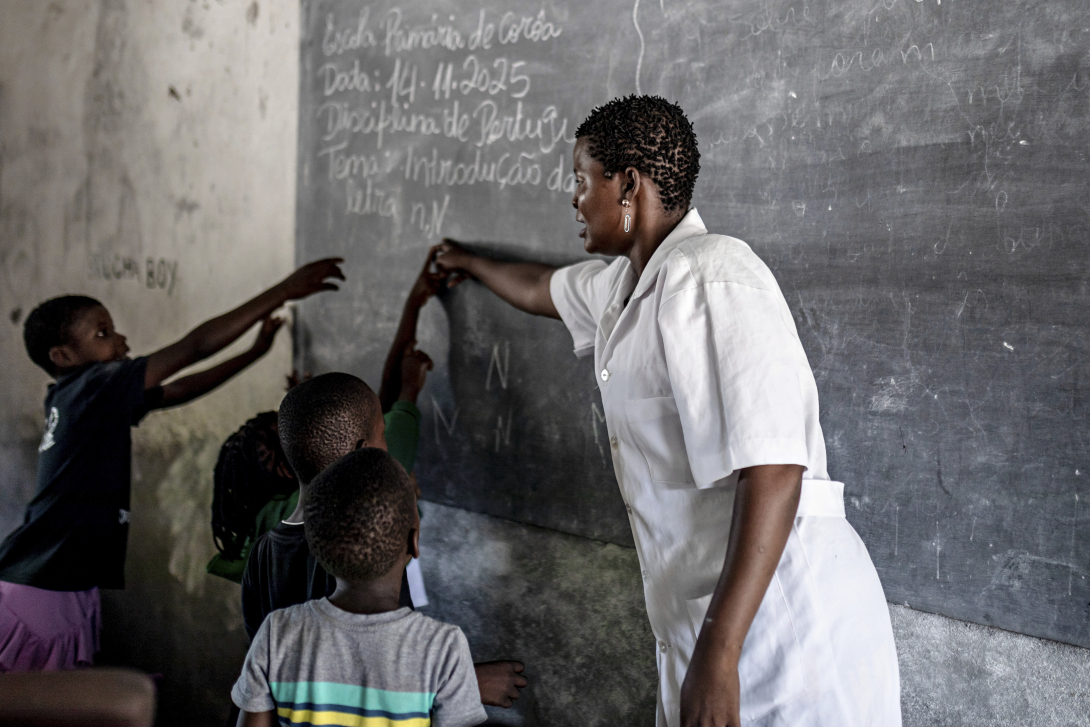
Photo credit: Expertise France, Natalia Jidovanu
What’s in there for our partners?
Three key priorities are put into action through three Facility Windows:
Window 1: System solutions and demand driven technical assistance to support countries in designing, implementing and evaluating national teacher policies and build capacity of Ministries of Education.
- Partners: Ministries of Education
Window 2: Testing and scaling up successful and innovative programmes on teacher education and training, including in fragile contexts. Service delivery solutions aimed at accelerating improvements in teaching quality and enhancing teacher professional development.
- Partners: Public actors and institutions, individual or consortia-led national or international NGOs.
Window 3: Research and Production of knowledge on teacher issues: research partnerships on teacher policies, satisfaction and well-being, and evidence for better teacher governance and professional development. Solutions that enhance research capacity and contribute to evidence-based policymaking.
- Partners: Consortia of universities and research centres from Europe and Sub-Saharan Africa
Knowledge Management, Communication and MEAL (Monitoring, Evaluation, Accountability and Learning) are the three crosscutting components of the RTIA-Facility.
Knowledge management focuses on enhancing the regional knowledge base and cross-learning within the Facility and the Initiative, as well as with their partners. Communication aims to increase awareness of the Facility, its activities, achievements and results. The MEAL component is responsible for ensuring results-based management, monitoring, evaluation and quality assurance of all Facility activities.
Knowledge Management is guided by the following three strategic priorities:
- Demand-driven knowledge production and innovation
- Collaboration, sharing and multi-stakeholder engagement
- Learning and knowledge management embedded in the organisational culture
This platform is driven by these three strategic priorities and will serve as a central hub for sharing knowledge, updates, and key activities within the RTIA.