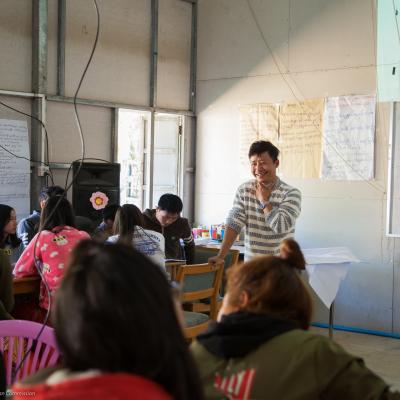

The current state of the enabling environment for civil society in each country part of this project is captured in a concise, two-page Enabling Environment Snapshot. This first Snapshot provides an overview of the enabling...
Library
In 2002, Timor-Leste (East Timor) became an independent nation after more than four centuries of Portuguese colonial rule and two decades of Indonesian annexation. Independence came after a 1999 UN-supervised referendum, which...
Jamaica’s democratic framework provides a solid foundation for civil society, yet systemic challenges undermine its potential to fully enable CSO operations. The 2011 Charter of Fundamental Rights and Freedoms establishes clear...
The Republic of The Gambia continues its democratic journey as one of West Africa’s most significant political transitions in recent years. The small nation of 2.5 million people is surrounded by Senegal except for its Atlantic...
Eswatini is governed under an absolute monarchy, where the King holds executive, legislative, and judicial authority. The country operates a hybrid governance system that blends traditional institutions with liberal democratic...
Deliberative methods are increasingly a source of inspiration for those who seek to redress the global trend of deepening dissatisfaction in democracy. Such methods offer parliaments the opportunity to engage citizens in rigorous...
Dive into the YOU(th) CARE Glossary to understand our approach and its main definitions
We are glad to share with you the new publication “Ethical Travel. How to Talk Fairly About the World” prepared by the Go’n’Act Foundation within the framework of the EU-funded project Connect for Global Change. This 60-page e...
This position paper explores how Web3 and artificial intelligence (AI) can jointly strengthen health systems as global public goods. Building on the introductory paper Bridging the Digital Divide, it provides a forward-looking...
Parliaments are both spaces and places. As spaces, they are collections of rooms, halls, offices and grounds that are used for particular purposes. As places, they mean something to the people they represent – but they don’t mean...

