Urban Notes Newsletter - July 2026
|
9th July 2026 Urban Notes INTPA Newsletter on urban development – July 2026 |
|
Image

|
|
KEY STORIES:
|
| WORLD URBAN FORUM - WUF 13, 2026 |
|
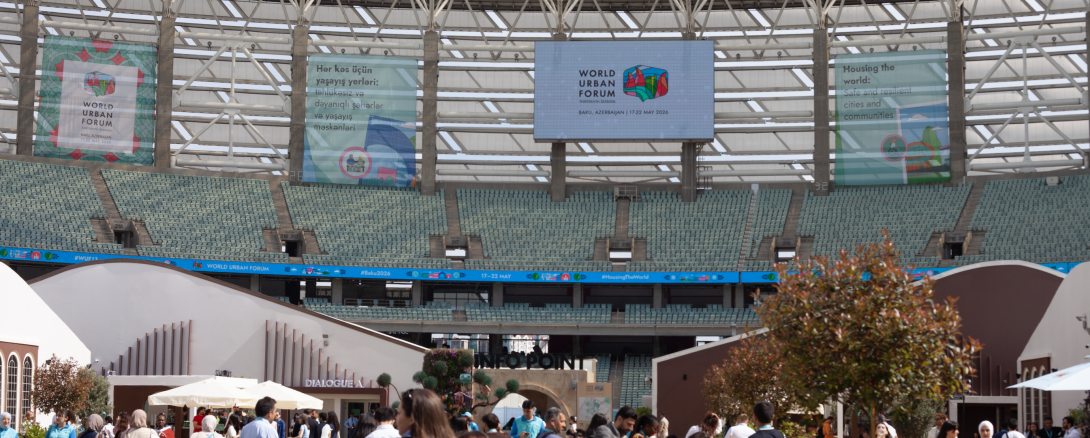
17-22 May 2026 — World Urban Forum - WUF 13 (Baku, Azerbaijan): Under the theme “Housing the world: Safe and resilient cities and communities”, WUF 13 took place in Baku at the midpoint of the New Urban Agenda. The Forum explored the urgent need to address the global housing crisis and the potential of housing as a driver of inclusive, resilient, and sustainable urban development. A networking event was organised by African Union an UN-Habitat together with INTPA on the potential and importance of linking corridor investment and territorial and urban development, where Sergio Oliete Josa presented the perspective from a Global Gateway angle. He also joined a session organised by the Swedish Association of Local Authorities and Regions (SALAR) on a “360° Global Gateway” approach connecting housing, infrastructure and local economic development. Additionally, he convened the 3rd closed-door meeting of the Global Gateway Urban Platform with EU Member States, development banks and agencies, which focused on strengthening the urban dimension of Global Gateway, improving early-stage project preparation and pipeline development, and reinforcing Team Europe coordination on urban investments in partner countries.
Image
|
| WATERBORNE PUBLIC TRANSPORT IN LAGOS, NIGERIA: READY FOR IMPLEMENTATION |
|
Following the signing of all Financing Agreements, the €410 million Global Gateway flagship waterborne public transport project in Lagos, Nigeria (2024-2030) known as the “OMI EKO” project and led by AFD, is moving into implementation. The project combines a €60 million EU grant, loans from AFD and the EIB, and earlier EU-funded preparatory studies, through CoM SSA III. African inland waterways and bodies of water hold an interesting and largely untapped development potential for possibly cost-efficient passenger and freight transport, deserving greater attention. In that sense the Lagos project is an important example of such urban transport models that possibly could be of relevance for other settings.
Image

|
| MARKET MONITOR: EU COMPANIES ENGAGEMENT IN TENDERS AND COMPETITIONS IN INTPA COUNTRIES |
|
As an avenue to start monitoring the European private sector involvement in urban development in our partner countries, in this section we have started collecting news on concrete projects/deals:
|
| COUNTRY FOCUS: GHANA |
|
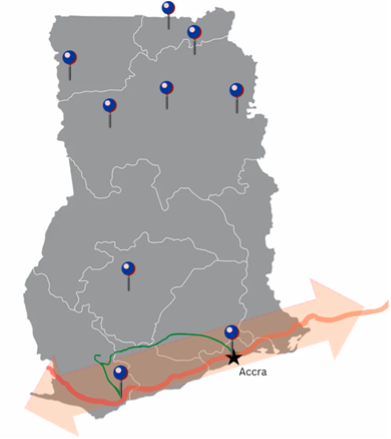
Over the past several years, the European Commission has progressively strengthened its engagement in the urban sector in Ghana through a series of programmes with the EU–Ghana Partnership for Sustainable Cities as a main instrument supporting the development of secondary cities, particularly in the Northern part of the country. The Partnership has been developed through a phased approach, and its implementation has been supported by the Urban Development Technical Facility (UDTF) through assignments focusing on different aspects – the analysis of Ghana’s decentralisation framework and finance system, spatial sustainability analyses and more.
Image
|
| UPDATES FROM THE URBAN DEVELOPMENT TECHNICAL FACILITY |
|
In The Gambia, a team of experts supported the EU Delegation with an assessment of solid waste management (SWM) systems in seven urban centres, combining field assessments, Earth Observation data, and demographic analysis to diagnose existing challenges and urbanisation pressures, revealing critical gaps such as low collection coverage (≤5%), uncontrolled dumping, and institutional weaknesses amid rapid urbanisation. The study provided tailored recommendations—including controlled landfills, waste collection upgrades, and circular economy pilots—to strengthen SWM infrastructure, projecting service needs through 2030.
Image

In Guinea-Conakry, a study analysed recoverable material value chains within Conakry’s waste management system, evaluating 10 key waste fractions (e.g., organics, plastics, metals) against criteria like technical feasibility, economic viability, and environmental impact. The report recommended a segmented approach—prioritising high-value recyclables (e.g., high-density polyethylene, metals) while proposing public-supported solutions for low-viability streams (e.g., organic waste composting, fine fraction “technosol” and Black Soldier Fly larvae pilots)—to align with Guinea’s urban waste challenges and climate goals ahead of the 2029 Baritodé landfill opening. In El Salvador, a team of experts completed a study proposing a comprehensive tariff integration system for San Salvador’s metropolitan public transport, centred on three pillars: a technical fare structure ($0.53 USD with social discounts), interoperable payment with technological systems required to implement it (cash, contactless cards, QR, and EMV), and the creation of AMTRA, an autonomous transport authority to oversee integration and governance. The reform outlines a phased implementation—starting with short-term fixes (flat fares, basic interoperability) and progressing to long-term goals (zone-based pricing, seamless transfers, and expanded transit modes)—while ensuring financial sustainability, social inclusion, and technological independence to avoid vendor lock-in.
|
| URBAN TRAININGS |
|
On 26 February, we held the fourth session of our webinar series Financing for Urban Infrastructure, focused on Own Source Revenues (OSR). Enhancing municipalities’ OSR collection and management is a powerful catalyst for the implementation of sustainable urban development projects. The webinar aimed at equipping EU Delegations with knowledge and tools to design solid programmes for strengthening OSR in partner countries.
Image

|
|
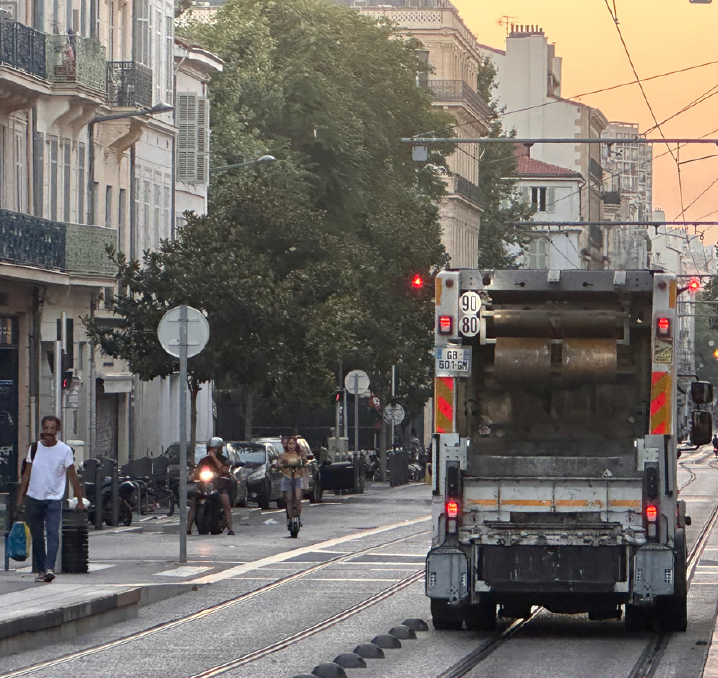
On 22 April, we also held a new session of the Solid Waste Management (SWM) webinar series, in which we focused on the costing and financial planning of SWM systems in urban areas. The session provided practical guidance on supporting local authorities and stakeholders in designing sustainable financing strategies, understanding cost recovery mechanisms, and adapting tools to diverse urban contexts—particularly in Latin America, Sub-Saharan Africa, and ASEAN—while balancing technical, financial, and policy considerations.
Image
|
| RESOURCES |
|
Like in the past, the EU has been a key partner to UN-Habitat for the implementation of its 2020-2025 Strategic Plan, providing crucial funding (€168,5 million) to tackle the challenges of the overlapping urban and climate crisis–with the Global Gateway emerging as an overarching framework for strategic and impactful interventions. The Strategic Plan 2026-2029 inaugurates the next chapter of UN-Habitat’s work focusing on housing as the core enabler of sustainable (urban) development and a catalyst across three impact areas—climate change, poverty eradication, and crises driven by both natural and anthropogenic causes.
Image

|
|
What a Waste 3.0 - The third edition of the World Bank’s global report on municipal solid waste management (MSWM) is a valuable technical reference for colleagues working or interested in working on municipal solid waste management as it provides structured data on waste management - from generation to disposal - and information on key aspects such as private sector participation and financing of MSW services. MSWM represents both a massive challenge and a huge opportunity for many low and middle-income countries, especially in Sub-Saharan Africa and South Asia, and tackling it demands evidence-based projects.
Image
|
| EVENTS |
|
10 June — Driving Urban Transitions Conference 2026 (Brussels, Belgium): The Conference of the European Partnership Driving Urban Transitions (DUT) gathered stakeholders from private and public sector, academia and civil society from across the globe. The Conference will showcase concrete results from DUT-funded projects and highlight the strategic direction towards 2033.
|
|
9-13 June — The New European Bauhaus (NEB) Festival (Brussels, Belgium): The European Commission hosted the third edition of the NEB Festival in Brussels, a flagship event celebrating creativity and innovative ideas in the architecture world. The core themes of this edition were Democratic Engagement and Affordable Housing.
|
|
3-5 November — Smart City Expo World Congress 2026 (Barcelona, Spain): In the context of the Global Gateway’s ambitions to strengthen engagement with the EU private sector, INTPA F4 plans to attend the Smart City Expo World Congress (SCEWC) later this year to explore further opportunities to advance European-led smart city solutions in partner countries.
|
|
Thank you for reading! If you are interested in the topics or initiatives presented, reach out to INTPA F4 INTPA-F4@ec.europa.eu. Find the attachments for this edition of the newsletter on the Urban Knowledge Hub on Capacity4development via this link. Disclaimer: Please not that this not an official communication from the European Commission. |