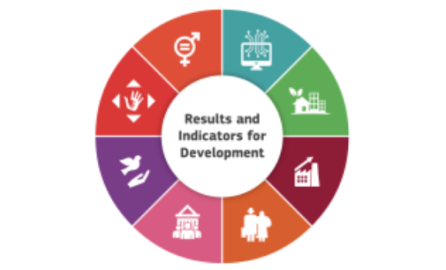
Results and Indicators logo with 8 different colours representing the thematic sectors of the European Union External Action services

Results and Indicators

Resource
EU-official
In these pages users can find help to identify the appropriate results frameworks and indicators for EU-funded external action interventions. The pages are designed primarily for the intervention design phase, but are also useful during implementation, monitoring, reporting, and evaluation.

Sectors

Introduction

In these pages users can find help to identify the appropriate results frameworks and indicators for EU-funded external action interventions. The pages are designed primarily for the intervention design phase, but are also useful during implementation, monitoring, reporting, and evaluation.

Methodological approach

The guidance on results and indicators offers support to build strong logical frameworks, identify SMART results and measurable indicators in with INTPA priorities. Access the methodological guidance. (PDF attached)

Predefined indicators for design and monitoring of EU-funded interventions

Predefined indicators appear in OPSYS as predefined indicators when users are designing Logical Framework Matrix. Check the latest list of predefined indicators in OPSYS here.

Results chain diagram

The results chain covers outputs, outcomes and impact. The diagram is an interactive tool making users to have a view on the logical links between outputs and outcomes, and how their achievement would lead to the desired impact.

Results frameworks

The EU Results Framework (EURF) and the Global Europe Results Framework (GERF) are the DG INTPA corporate results framework used to collect and measure key results achieved by interventions funded by external assistance financing instruments of EU international cooperation. For interventions funded by DG ENEST and DG MENA, the Results Framework used is the Instrument for Pre-Accession Assistance (IPA III). Access the updated FPI Results Framework from February 2025. Check the latest methodological aspects and notes here.